
Filing an Australian income tax return is an important annual responsibility for many individuals, but the process can feel complicated when income sources, deductions, investments and changing circumstances are involved. Understanding tax return lodgement helps taxpayers report information accurately, claim eligible deductions and meet their obligations to the Australian Taxation Office (ATO). Whether you are an employee, sole trader, investor or someone with multiple income sources, knowing what information to prepare can make the process much easier. This guide explains how tax returns work, when they are generally due, how to lodge online, what records to keep, when professional assistance may be useful and what to do if you discover an error.
Quick Answer: What Is Tax Return Lodgement?
Tax return lodgement is the process of submitting your annual income and deduction information to the ATO so your taxable income and final tax position can be calculated. Individuals can generally lodge through myTax, while eligible taxpayers can use a registered tax agent. Accurate records, correct deductions and timely submission are essential.
What Does a Tax Return Actually Include?
An Australian individual tax return generally brings together information about your income, deductions, tax offsets and other relevant financial circumstances for the financial year.
Information may include:
- Salary and wages
- Interest from bank accounts
- Government payments
- Dividends and distributions
- Rental property income
- Capital gains
- Business or contracting income
- Eligible work-related and other deductions
Much of the income information may already be available through ATO systems, but taxpayers remain responsible for checking that the information is complete and accurate.
The purpose is not simply to obtain a refund. Depending on the individual’s circumstances, the final assessment may result in a refund, no additional amount payable or a tax liability.
Who Needs to Lodge a Tax Return?
Not every Australian resident necessarily has to lodge a return every year. The requirement depends on factors such as income, age, residency, tax withheld and particular financial circumstances.
A person may need to lodge where they have received taxable income above relevant thresholds or have circumstances that create a lodgement obligation. People with investment income, rental properties, capital gains or business activities may also have additional considerations.
If you are unsure whether you need to submit a return, checking your circumstances against current ATO guidance is safer than assuming that no return is required.
When Is Tax Return Lodgement Due?
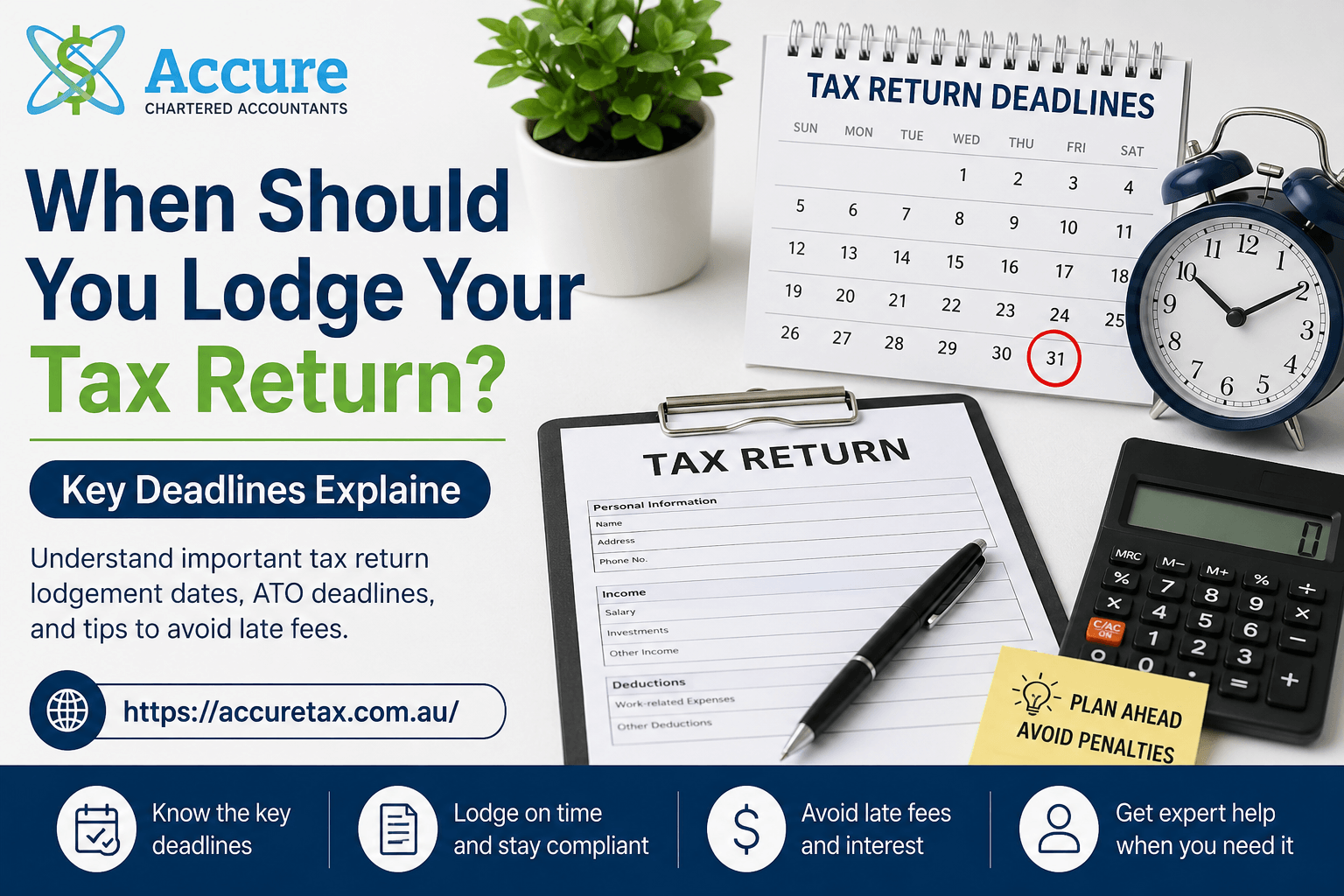
For many individual taxpayers who lodge their own return, 31 October is the standard deadline following the end of the financial year. However, deadlines can differ depending on circumstances and whether a registered tax agent is used.
The ATO’s published lodgement schedules can include different dates for taxpayers with particular circumstances. For example, some returns may have later dates under tax-agent arrangements or specific concessions.
This means taxpayers should not rely on a single date without checking their individual situation.
Why Should You Check the Deadline Early?
Leaving preparation until the last moment can make it harder to locate receipts, verify income information or resolve discrepancies.
A practical approach is to begin gathering documents well before the expected deadline. This gives you time to investigate missing information and obtain professional guidance if required.
How Does ATO Tax Lodgement Work?
Understanding the basic ato tax lodgement process can help reduce errors.
Step 1: Gather Your Income Information
Start by reviewing salary information, bank interest, dividends, investment income, government payments and any other taxable amounts.
Step 2: Review Potential Deductions
A deduction generally needs to relate to earning your income, be paid by you and not have been reimbursed. You should also have appropriate evidence supporting the claim.
Step 3: Check Pre-Filled Information
When using myTax, some information may already be available from ATO records. Review it carefully rather than assuming every entry is correct.
Step 4: Complete and Review the Return
Check income, deductions, offsets and personal details before submitting. Errors can create delays or lead to an incorrect assessment.
Step 5: Lodge and Keep Your Records
After submission, the ATO processes the return and issues a notice of assessment explaining the outcome. Records supporting deductions generally need to be retained for at least five years from lodgement.
What Deductions Can You Claim?
Tax deductions can reduce taxable income when the relevant legal requirements are satisfied. Common areas may include work-related expenses, certain education expenses, charitable donations and costs associated with income-producing activities.
However, an expense being work-related does not automatically make it deductible.
For example, an employee who purchases equipment used partly for work and partly for private purposes generally needs to determine the income-producing portion rather than claiming the entire cost.
The ATO states that a work-related expense generally needs to be paid by the taxpayer, directly relate to earning income and be supported by appropriate records.
What Records Should You Keep?
Good record keeping is one of the most important parts of accurate tax preparation.
Useful documents can include:
- Receipts and invoices
- Bank statements
- Income statements
- Donation receipts
- Investment records
- Rental property documents
- Vehicle and travel records where applicable
- Records supporting work-related expenses
The ATO generally requires taxpayers to keep records supporting deductions for five years from the date the return is lodged. Some situations require records to be retained longer, particularly where information continues to affect later tax returns.
Digital record keeping can make it easier to organise documents throughout the year rather than attempting to reconstruct expenses at tax time.
Can You Lodge Your Return Online?
Yes. Individuals can generally use myTax, the ATO’s online tax return service, through myGov.
Online lodgement can be convenient because some information is pre-filled and the system guides users through relevant sections. However, pre-filled information should still be reviewed for accuracy and completeness.
Taxpayers with straightforward financial circumstances may find online lodgement manageable, while people with investments, rental properties, business income, capital gains or complex deductions may benefit from additional assistance.
When Should You Use a Registered Tax Agent?
A registered tax agent may be useful when your financial affairs are complicated or when you are uncertain about tax rules.
Professional assistance may be particularly relevant when you have:
- Multiple income sources
- Rental properties or investments
- Capital gains and losses
- Business or contracting income
- Complex work-related deductions
- Previous tax-return errors
- Significant changes in your financial circumstances
Using a professional does not remove your responsibility to provide accurate information. You should still review the information supplied and understand the claims being made on your behalf.
What Is BAS Lodgement Online and How Is It Different?
BAS lodgement online relates to submitting a Business Activity Statement, which is generally associated with business obligations such as GST, PAYG withholding and other reporting requirements.
A BAS is not the same as an individual income tax return. A business may have obligations for both, depending on its structure and tax registrations.
Understanding this distinction is important for sole traders and business owners because income tax reporting and activity statement obligations can operate on different reporting cycles.
What Happens If You Make a Mistake?
Mistakes can happen even when a return has been prepared carefully. A taxpayer may discover an omitted income source, incorrect deduction or other information that needs correction.
The appropriate response is usually to address the error rather than ignore it. Depending on the circumstances, an amendment may be available through the relevant ATO process.
If the issue involves a significant amount, complex transaction or uncertain tax treatment, professional advice can help determine the appropriate course of action.
The ATO also has review and verification processes. Taxpayers should retain supporting documentation so they can explain how figures and deductions were calculated if requested.
Tax Return Lodgement: Common Mistakes to Avoid
Several avoidable mistakes can create unnecessary problems.
1.Claiming Private Expenses
A personal expense should not automatically be treated as deductible simply because it was incurred during employment or business activities.
2.Forgetting Additional Income
Bank interest, investment income, digital asset transactions, rental income and other taxable amounts can be overlooked.
3. Losing Supporting Records
A deduction without appropriate evidence can become difficult to substantiate if the ATO asks for documentation.
4.Relying Entirely on Pre-Filled Information
Pre-filled data is useful, but taxpayers should still verify that the information is complete and correct.
5. Missing the Applicable Deadline
Late lodgement can create compliance issues, particularly where a taxpayer already has outstanding obligations.
Comparison: DIY Lodgement vs Professional Assistance
| Factor | Self-Lodgement | Registered Tax Agent |
| Online access | myTax through myGov | Agent-managed lodgement options |
| Cost | Usually lower | Professional fee applies |
| Time required | More preparation by taxpayer | Less administrative work for taxpayer |
| Complex deductions | Requires self-research | Professional guidance available |
| Investment/property issues | May require additional research | Can assist with relevant tax treatment |
The right option depends on the complexity of your circumstances, confidence with tax requirements and the amount of documentation involved.
Expert Insights: Best Practices for a Smoother Filing Process
A reliable tax preparation process starts well before the return is submitted.
Keep records throughout the year. Storing receipts and digital documents as expenses occur reduces the risk of forgotten deductions or missing evidence.
Separate business and private transactions where possible. Clear financial records can make it easier to identify income-producing expenses and explain transactions.
Check unusual transactions carefully. Property sales, investments, overseas income and business changes may have tax consequences that are not obvious from a standard return.
Review before submission. Check names, income figures, deductions, bank details and other relevant information before lodging.
Keep supporting documents after lodgement. Filing the return does not mean the supporting records can immediately be discarded.
Due Diligence Checklist Before Lodging
Before submitting your return, consider whether you have:
- Reviewed all income sources and ATO pre-filled information.
- Confirmed that claimed deductions are eligible and properly supported.
- Checked investment, rental, capital gains or business information where applicable.
- Saved copies of relevant records.
- Confirmed the applicable lodgement deadline.
- Reviewed the final return before submission.
Key Takeaways
Tax return preparation requires accurate reporting of income, deductions and relevant financial information.
Many individuals can lodge online through myTax.
The standard individual deadline is commonly 31 October, but individual circumstances can change the applicable date.
Work-related deductions generally need to satisfy specific eligibility conditions and be supported by records.
Most supporting deduction records should be retained for at least five years.
Complex investments, property, business income or capital gains may justify professional assistance.
Errors should be addressed promptly rather than ignored.
Conclusion
Accurate tax preparation is about more than submitting a form before a deadline. It involves reporting income correctly, claiming only eligible deductions, maintaining supporting records and understanding your obligations. Using myTax can simplify straightforward returns, while a registered tax agent may be useful when financial circumstances become more complex.
Most importantly, taxpayers should verify the applicable tax return lodgement due date, keep reliable records and address errors promptly. For current rules and individual circumstances, the Australian Taxation Office remains the authoritative source, while reputable tax professionals can provide tailored assistance where needed.
Faqs
What is tax return lodgement?
Tax return lodgement is the process of submitting your annual income and deduction information to the ATO. The information is used to determine your taxable income and final tax position. Depending on the circumstances, the result may be a refund, an amount payable or no additional amount. Individuals can generally lodge themselves through myTax or use a registered tax agent.
Can I lodge my tax return online?
Yes. Eligible individuals can generally lodge online using myTax through myGov. Some information may be pre-filled from ATO records, which can make preparation easier. However, taxpayers should carefully check the information and add anything missing before submitting. Online lodgement can be suitable for straightforward circumstances, while complex affairs may benefit from professional assistance.
How long should I keep tax records?
The ATO generally requires records supporting deductions to be kept for at least five years from the date the tax return is lodged. Some records may need to be retained for longer when they affect future tax returns, capital gains calculations or other ongoing obligations.
Should I use a registered tax agent?
A registered tax agent can be helpful when your financial affairs involve rental property, investments, capital gains, business income, multiple income sources or complicated deductions. They can assist with interpreting relevant tax rules and preparing the return. However, taxpayers should provide complete information and review the return before it is lodged.

No comment